
Conscious leadership coaching helps leaders build self-awareness and emotional regulation so they can lead with more clarity and resilience under pressure. It pairs structured reflection with practical accountability, and meta-analytic evidence shows executive coaching produces measurable behavioral change rather than vague inspiration.
TL;DR:
- Executive coaching research found moderate to large positive effects on leaders’ behavior, while attitude changes took longer programs to show.
- A review of 109 studies linked leader mindfulness with better follower outcomes and reported effect sizes from 0.33 to 0.39.
- Self regulation and communication gains may appear within 90 days, while trust or conflict changes need 6 to 12 months of sustained work.
- Choose a coach with relevant experience, a validated assessment, and concrete client examples; ask how progress is measured, and avoid vague answers.
- Typical engagements last 3 to 12 months and include weekly sessions lasting 60 minutes, an initial assessment, behavioral goals, and workplace progress checks.
Table of Contents
- What is conscious leadership and what are the 15 commitments?
- What do conscious leadership coaching sessions actually teach?
- Does conscious leadership coaching actually work?
- Who benefits most from this kind of coaching?
- What does a typical coaching engagement look like?
- How do you choose the right conscious leadership coach?
- How MMDC Alchemy approaches conscious leadership coaching
- What changes when leaders do this work seriously
- Ready to start your own coaching engagement?
- FAQ
- Sources
What is conscious leadership and what are the 15 commitments?
Conscious leadership is a way of operating from curiosity and responsibility instead of defensiveness and blame. It differs from softer, feel-good leadership advice because it asks leaders to examine their own reactions before managing anyone else’s, which makes it demanding rather than comfortable.
The framework behind most conscious leadership coaching comes from The 15 Commitments of Conscious Leadership, which outlines habits that separate reactive management from grounded leadership. A few that show up constantly in coaching work:
- Radical responsibility: owning your part in a problem instead of assigning blame.
- Feeling all feelings: processing emotion in the moment instead of suppressing it until it leaks out sideways.
- Eliminating gossip: speaking directly to people instead of about them.
- Being the resolution: treating yourself as the source of a fix rather than waiting for someone else to change first.
These commitments matter because they shape how a leader handles conflict, feedback, and ambiguity, the moments where most teams actually watch how their leader behaves.
What do conscious leadership coaching sessions actually teach?
Coaching typically starts by establishing a self-awareness baseline, often through structured assessments rather than guesswork, since leaders tend to misjudge their own blind spots. From there, sessions build specific emotional intelligence competencies: naming emotions accurately, regulating reactivity, and reading how your state affects a room. A systematic review identifies self-awareness, empathy, and relationship management as the core competencies that cascade into better team outcomes.
Mindfulness practice is a regular feature of this work, not a side activity. Methods commonly used across sessions include:
- Validated assessments, such as the Energy Leadership™ Index, to baseline current patterns.
- Guided reflection exercises between sessions to track triggers and responses.
- Role-play for difficult conversations before they happen in real life.
- Written action plans tied to specific, observable behavior changes.
Pro Tip: Keep a short daily log of moments you reacted instead of responded. Patterns surface faster than memory alone.
Does conscious leadership coaching actually work?
The short answer is yes, with evidence behind it rather than just testimonials. A meta-analysis of executive coaching found a moderate-to-large positive effect on behavioral outcomes, meaning coaching changes what leaders actually do, not just what they believe about themselves. Attitude-level change took longer programs to show up, but behavior shifted consistently.
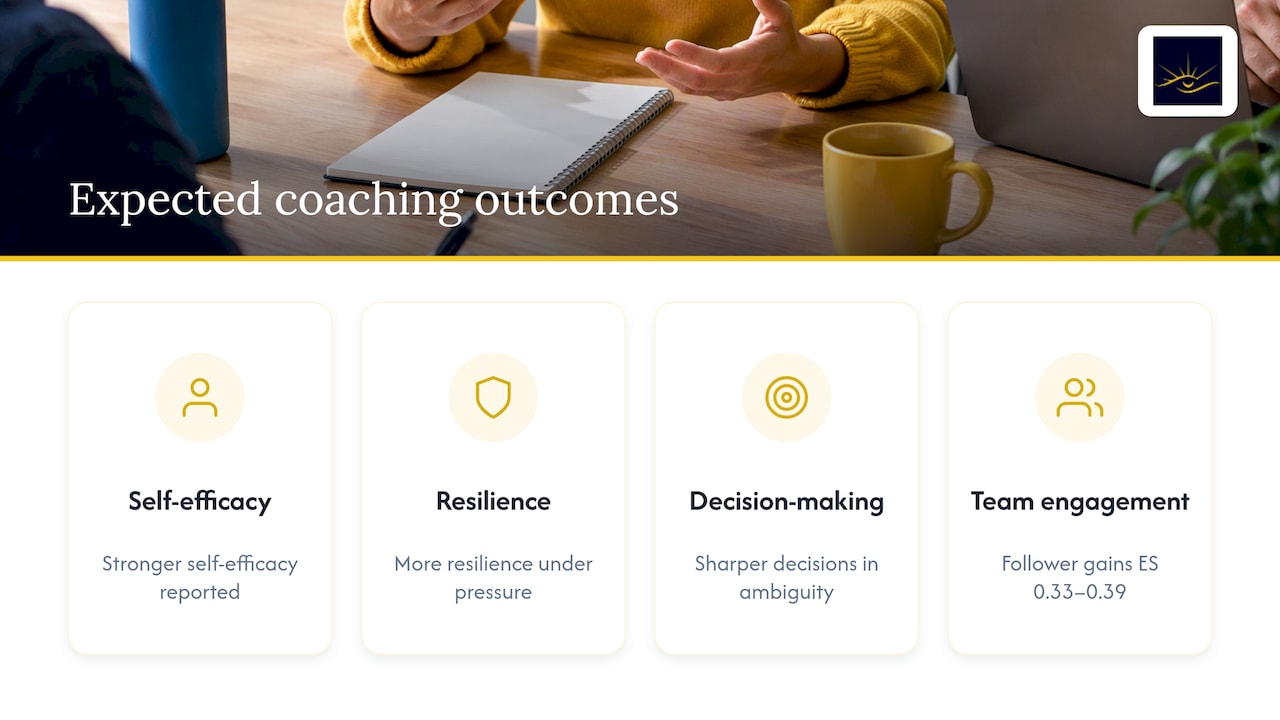
A meta-analytic review of 109 studies found leader mindfulness is associated with meaningfully better follower outcomes, with effect sizes in the range of 0.33 to 0.39. That means a leader’s own mindfulness practice shows up in how their team performs, not just in how the leader feels personally.
Put together, the realistic outcomes to expect from coaching include stronger self-efficacy, more resilience under pressure, sharper decision-making in ambiguous situations, and higher team engagement, the kind of changes that compound over months rather than appearing overnight.
Who benefits most from this kind of coaching?
Conscious leadership coaching tends to help a specific set of people more than a general audience looking for leadership tips — especially those leaders tasked with shifting team or organizational culture, as described in Why Digital Transformation Fails: A Leader’s Guide. The clearest fits include:
- Mid-to-senior leaders navigating burnout, a role change or an identity shift tied to career stage.
- Leaders tasked with shifting team or organizational culture, not just hitting numbers.
- Anyone facing recurring conflict, flat engagement scores, or a strategic initiative that keeps stalling.
Early shifts, better self-regulation and clearer communication, often show up within the first 90 days. Deeper changes, like rebuilding trust on a team or shifting how a leader handles conflict under real pressure, tend to take 6 to 12 months of sustained work.
What does a typical coaching engagement look like?
Most conscious leadership coaching follows a predictable structure, even though the content gets personalized quickly. A typical engagement includes:
- Weekly sessions, usually 60 minutes, held virtually with recordings available for review.
- An assessment phase, often using a tool like the Energy Leadership™ Index to baseline energy patterns and behavioral tendencies.
- A 3 to 12 month program length, depending on whether the goal is a specific skill or a broader identity shift.
- Defined deliverables, such as behavioral goals, periodic 360 feedback, and progress checked against real workplace outcomes rather than vague impressions.
This structure gives both the leader and their organization a way to track whether coaching is producing change, instead of relying on a feeling that things seem better.
How do you choose the right conscious leadership coach?
Not every coach who calls themselves “conscious” uses a rigorous method. A few things separate credible coaches from ones offering motivational chats:
- Demonstrated experience with leaders in situations similar to yours, not just a general coaching certificate.
- Use of a validated assessment, since a tool like the E.L.I. gives you a baseline to measure against later.
- A track record of specific transformations they can describe concretely, not just a claim of general success.
When interviewing a coach, ask how they measure progress, what a typical 90-day arc looks like, how much work happens between sessions, and what happens when a client resists feedback. Vague answers to any of these are a red flag. Pricing varies widely based on experience, session frequency, and program length, so expect quotes to differ significantly and ask what’s included before comparing numbers. For deeper context on what executive-level coaching engagements involve, see our piece on mastering the alchemy of leadership.
How MMDC Alchemy approaches conscious leadership coaching
Our coaching model is built around deep, high-touch work rather than generic frameworks applied the same way to every client. Our approach combines conscious leadership principles with practical career and life strategy, which means sessions address both the inner work and the real decisions in front of you.
- We use assessments to baseline where a leader’s energy and reactive patterns sit before coaching begins.
- Our engagements run as individualized 1:1 packages, not group programs, with accountability between sessions.
- We have guided many client transformations, which shapes how we structure each new engagement around what tends to actually move the needle.
A diagnostic call or the E.L.I. assessment is usually the most useful first step if you’re deciding whether this fits your situation.
What changes when leaders do this work seriously
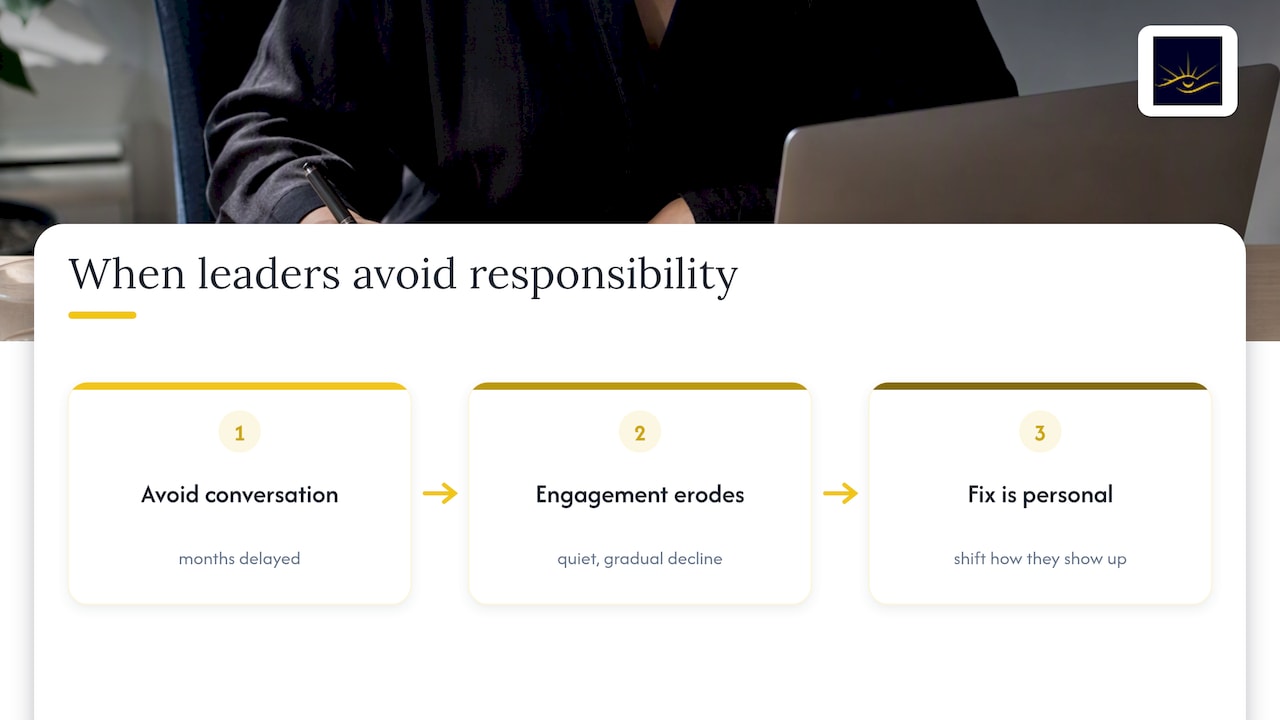
The hardest part of conscious leadership coaching is not learning the framework, it’s sitting with the discomfort of radical responsibility when your instinct is to explain why a situation wasn’t your fault. One client pattern we see often: a leader avoids a hard conversation for months, the team’s engagement quietly erodes, and the fix turns out to be smaller and more personal than expected, usually a shift in how the leader shows up, not a new strategy.
The leaders who get the most from this work are the ones willing to be uncomfortable before they feel confident again.
— Junna Liao
Ready to start your own coaching engagement?
If you’re weighing burnout, a career transition, or a leadership role that no longer fits who you’ve become, our 1:1 career coaching and life coaching programs with Junna combine conscious leadership principles with concrete life and career strategy.
A good starting point is the Energy Leadership™ Index assessment, which gives you a clear baseline before committing to a full program. With more than 600 client transformations behind our approach, a first session typically covers where you are now, what’s driving the current friction, and what a realistic path forward looks like. Book a discovery call to see if it’s the right fit.
FAQ
What are the 15 principles of conscious leadership?
They come from The 15 Commitments of Conscious Leadership, a framework built around habits like radical responsibility, feeling all feelings, eliminating gossip, and being the resolution. Each commitment targets a specific reactive pattern that gets in the way of clear, grounded leadership.
What are the 5 C’s of leadership?
Definitions of various leadership trait sets vary across programs, so there’s no single agreed-upon list. Most versions emphasize traits like communication, competence, and character, but conscious leadership coaching tends to draw more directly from the 15 commitments framework instead.
What is the 70/30 rule in coaching?
This isn’t a standardized or widely documented coaching principle, so treat any specific ratio you encounter with caution. What’s consistently supported by research is that training which combines individualized feedback with practical application produces stronger, longer-lasting results than lecture-only formats.
How much do leadership coaches cost?
Pricing depends heavily on a coach’s experience, session frequency, and program length, so costs vary widely across the industry. Rather than comparing a single number, ask what’s included in a package, since program length has been shown to influence outcomes more than session count alone.
What results should I expect from conscious leadership coaching?
Expect improvements in self-efficacy, resilience, and decision-making as primary behavioral outcomes, supported by meta-analytic evidence on executive coaching. Team-level effects, like better engagement, tend to follow once a leader’s own behavior shifts first.
Sources
- The 15 Commitments of Conscious Leadership
- The Direct and Cascading Impacts of School Leaders’ Emotional Intelligence on Teachers and Students: A Systematic Review
- The effects of executive coaching on behaviors, attitudes, and personal characteristics: a meta-analysis
- Training emotional competencies at the workplace: a systematic review and meta-analysis
- Does leaders’ mindfulness benefit followers? A meta-analytic review
Recommended
- From 35 Studies: Transformational Coaching for Leaders That Lasts
- Mindful Leadership Coaching: Mastering the Alchemy of Presence and Energy
- 600+ Leader Transformations: Coaching First on Burnout vs Depression
This blog is for educational and inspirational purposes only. It is not medical, legal, financial, or mental health advice. Your journey is unique; please seek qualified professional support for decisions that affect your health, finances, or wellbeing.