The professionals who recover from burnout fastest master four skills: naming the single biggest energy drain, regulating an overactivated nervous system, protecting energy through firm boundaries, and tracking small recovery signals instead of daily output. These skills are learnable, not personality traits, and the recovery process is genuinely iterative rather than linear. Start by identifying what’s draining you most, because that’s the leverage point everything else builds on.
TL;DR:
- Focusing on controlling or removing one major energy drain within 72 hours proves that it is movable, which reduces mental resistance to further change.
- Brief mindfulness techniques like box breathing or grounding can significantly reduce stress and improve burnout symptoms with regular, consistent practice over weeks.
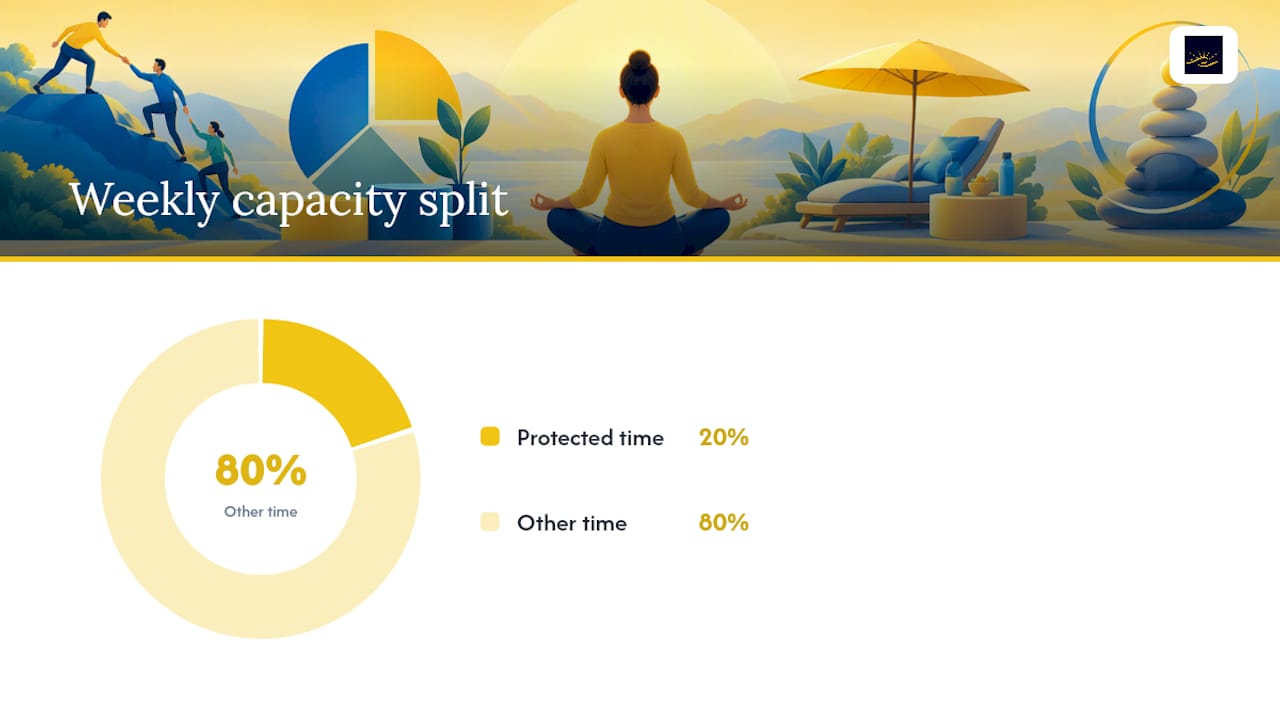
- Setting clear, fact-based boundaries and allocating about 20% of work hours for meaningful tasks prevents cumulative overload and supports sustainable recovery.
- Tracking signals such as morning energy, sleep quality, engagement, and emotional reactivity over weeks offers a more accurate picture of improvement than daily output.
- Long-term recovery typically involves stages of stabilization, capacity rebuilding, and reintegration, which can take from several weeks to several months depending on job structural factors.
Table of Contents
- What’s Draining You Most? How to Find Your Starting Point
- Nervous-System Regulation: Fast Resets That Restore Your Ability to Think
- Protecting Your Energy: Boundaries and Capacity Budgeting
- How Do You Know Your Resilience Is Actually Improving?
- What’s a Realistic Timeline for Burnout Recovery?
- What Can Leaders Do to Prevent Team Burnout?
- A Practitioner’s View on Turning Insight Into Habit
- Ready to Turn These Skills Into a Sustainable Plan?
- Where This Article’s Research Comes From
- Sources
- FAQ
What’s Draining You Most? How to Find Your Starting Point
Trying to fix everything at once is the most common mistake in burnout recovery. Recovery works better as a calibration process: identify the single largest drain, stabilize it, then move to the next one. Chasing five problems simultaneously spreads already-depleted energy so thin that nothing improves.
Start with a fast triage. Grab a notebook or a blank document and list every drain across four categories: work, relationships, health, and caregiving or financial pressure. Don’t filter yet, just dump everything. Most people find 8 to 12 items once they actually write it down instead of carrying it as background noise.
Then apply a simple sorting test to each item: can you control it, influence it, or should you remove it from your plate entirely? A demanding client you manage directly falls under control. A slow-moving reorganization at your company falls under influence, at best. A recurring commitment you never agreed to in the first place often belongs in the remove category.
Pick your top one or two drains, the ones costing you the most energy, and act within 72 hours. Waiting longer lets the drain calcify into “just how things are.”
- Name it in writing. State the specific drain in one sentence, not a vague feeling of overwhelm.
- Send one message. Email or message the person involved with a concrete ask: a deadline shift, a scope reduction, a delegated task.
- Delegate one task. Hand off something you’re doing out of habit, not necessity, to a colleague, assistant, or family member.
- Cancel one recurring commitment. A standing meeting, a volunteer role, a social obligation that no longer serves you.
- Block 30 minutes. Reserve time this week purely to plan your response to the drain, not to execute it yet.
This isn’t about solving the whole problem in three days. It’s about proving to yourself that the drain is movable, which changes how your brain relates to the rest of your workload.
Nervous-System Regulation: Fast Resets That Restore Your Ability to Think
Chronic stress keeps your sympathetic nervous system activated, which narrows attention, shortens patience, and pushes you toward reactive decisions instead of considered ones. Regulation techniques work by signaling safety to your body, which restores access to the prefrontal cortex, the part of your brain responsible for judgment and planning. This is why a five-minute breathing practice before a hard conversation often changes the outcome more than another hour of preparation would.
Four techniques cover most situations professionals face during a demanding week:
- Box breathing (4-4-4-4): inhale for 4 seconds, hold for 4, exhale for 4, hold for 4. Repeat for two minutes before a high-stakes meeting.
- Paced exhale (3:6): inhale for 3 seconds, exhale for 6. The longer exhale activates the vagus nerve and works well for acute overload, like right after a tense call.
- Grounding sequence: name five things you see, four you hear, three you can touch, two you smell, one you taste. Use this when anxiety spikes and you feel disconnected from the present moment.
- 60-second progressive relaxation: tense and release your shoulders, jaw, and hands in sequence. Good as a daily reset between back-to-back meetings.
None of these require a quiet room or special equipment. Box breathing works in a parked car outside a client site. Grounding works in a bathroom stall during a break.
Statistic Callout: A systematic review cited by the VA’s Whole Health Library found that several studies on brief mindfulness interventions, some lasting less than four hours total, showed measurable improvement in burnout symptoms among clinicians. Longer 8 week mindfulness-based stress reduction courses showed similar gains. The takeaway: you don’t need a retreat to get a real physiological benefit, but consistency over days and weeks matters more than any single session.
Protecting Your Energy: Boundaries and Capacity Budgeting
Boundaries fail most often because people try to defend them with explanations instead of decisions. A cleaner approach: state the boundary as a fact, then offer an alternative if one exists.
Try scripts like these:
- Declining new work: “I can’t take this on this week without dropping something else. Can it wait until Thursday, or is there someone else who can own it?”
- Pausing a request: “I need until tomorrow morning to give you a real answer instead of a rushed one.”
- Renegotiating scope: “I can deliver the full version by Friday, or a lighter version today. Which do you need more?”
- Protecting focus time: “I’m blocking 9 to 11 for deep work. I’ll respond to anything urgent by noon.”
Capacity budgeting extends this idea across your whole week. Reserve roughly 20% of your working hours, about one day in five, for the work that actually matters to you long term, not just what’s loudest. Block it on your calendar the same way you’d block a client meeting, and treat cancellations of that block as seriously as you’d treat canceling on a client.
Small daily habits reduce cumulative load without requiring a job change. Set a sleep-first rule: pick a wake time and protect the eight hours before it, rather than chasing an ideal bedtime that keeps slipping. Add short movement breaks between meetings. Plan meals in batches on Sunday so weekday decisions don’t drain willpower you need elsewhere.
Pro Tip: Keep a running “no” log for two weeks. Every time you decline something, write the request and your response in one line. Most professionals discover they said yes to more than they realized, and the pattern makes future boundaries easier to hold.
Know when self-management isn’t enough. If exhaustion, cynicism, or a drop in performance persists for more than a few weeks despite these changes, involve HR, a clinician, or seriously consider a role change. Boundaries manage load. They don’t fix a job that’s fundamentally unsustainable.
How Do You Know Your Resilience Is Actually Improving?
Daily output is a terrible measure of recovery, because burnout recovery often looks like doing less while feeling better, which reads as failure if output is your only gauge. Track these four signals instead.
- Energy on waking. Rate it 1 to 5 each morning before checking your phone. This catches trends your mood can hide.
- Sleep quality, not just hours. Note whether you woke rested or groggy, separate from how long you were in bed.
- Re-engagement with meaningful tasks. Are you starting to care again about work that used to matter, even in small ways?
- Emotional reactivity. Track whether small frustrations, a slow email reply, a minor scheduling change, still trigger outsized irritation.
Log two or three items each night in under a minute, then write one short trend note every Sunday: better, worse, or flat, with a guess at why. A single bad day means nothing. Three weeks of flat energy despite your micro-actions means it’s time to adjust the target drain, not abandon the process. Burnout symptoms typically cluster around exhaustion, cynicism, and reduced sense of effectiveness, so watch for movement in those three areas specifically rather than a vague sense of “feeling better.”
Accountability accelerates this. A brief weekly check-in with a trusted peer, a mentor, or a coach turns private tracking into a habit that survives busy weeks, largely because someone else expects an answer.
What’s a Realistic Timeline for Burnout Recovery?
Recovery from burnout doesn’t move in a straight line, and expecting it to sets people up for false alarm every time they have a bad week. Three broad, overlapping stages describe most recoveries.
- Stabilization (roughly 2 to 6 weeks): you address the top drain, start regulation practices, and set initial boundaries. Setbacks here are common, often triggered by a single bad week reviving old patterns.
- Rebuilding capacity (roughly 6 weeks to 4 months): energy returns unevenly. You’ll have strong days followed by a crash, which is normal recalibration, not failure.
- Reintegration (ongoing, 3 months and beyond): meaningful work starts feeling engaging again rather than merely tolerable, and boundaries become habitual instead of effortful.
These ranges vary widely depending on how severe the burnout was and whether the underlying organizational causes have actually changed. Someone who addresses individual habits while their job stays structurally unsustainable will plateau in stabilization no matter how disciplined they are.
Know which kind of support fits which stage. Coaching supports skill-building and accountability at any stage, particularly rebuilding and reintegration. Clinical mental health care becomes necessary when symptoms include persistent depression, panic, or an inability to function at work or home, that’s a medical concern, not a coaching one. Organizational intervention becomes necessary when the drain is structural: chronic understaffing, unclear roles, or a culture that punishes rest. A peer-reviewed synthesis on burnout interventions makes the point directly: individual strategies help, but sustained prevention usually requires institutional change alongside them.
What Can Leaders Do to Prevent Team Burnout?
Individual resilience skills only go so far when the environment keeps generating the same pressure. Leaders hold levers that individuals simply don’t.
Three moves matter most for managers. Clarify roles so people aren’t guessing at priorities, since ambiguity is itself a stressor. Adjust workload distribution before someone burns out rather than after, using check-ins that ask about capacity directly instead of assuming silence means fine. Protect recovery time visibly, blocking your own calendar the same way you’d want a direct report to, because modeling behavior changes team norms faster than any policy memo.
At the team level, a few practices compound over time:
- Run short weekly debriefs where people name one thing that drained them, not just what got done.
- Protect a genuine no-meeting block, at least half a day, and defend it when it gets challenged.
- Build psychological safety rituals, like normalizing “I’m at capacity” as an acceptable thing to say in a status update.
- Coach direct reports on their own capacity budgets rather than assuming they’ll figure it out alone.
Pro Tip: In your next one-on-one, ask “what’s one thing on your plate that shouldn’t be?” instead of “how are you doing?” The specific question gets a specific, actionable answer far more often.
Leadership resilience research from Wharton frames this as a skill developed across individual, team, and organizational levels simultaneously, not something delegated entirely downward. That’s an important caveat: if the root cause is chronic understaffing or an impossible workload, no amount of individual coping will fix it. Leaders who only teach breathing techniques while ignoring structural overload are treating a symptom and calling it a cure.
A Practitioner’s View on Turning Insight Into Habit
Most professionals who read about burnout recovery already know the techniques. Box breathing isn’t a secret. The gap isn’t information, it’s follow-through between a hard Tuesday and a calmer Friday, when nobody’s watching and old habits are easiest to slide back into.

That’s where coaching earns its place. A structured plan built around someone’s actual week, not a generic template, holds attention on the one drain that matters most instead of letting five problems compete for focus. Accountability between sessions is often the real differentiator between knowing a strategy and actually living inside it long enough for it to become automatic.
Some coaching approaches treat nervous-system regulation, capacity budgeting, and boundary design as an integrated plan rather than separate tips scattered across different resources. High-achievers, in particular, tend to intellectualize solutions quickly and then skip the unglamorous repetition that makes them stick. A coach’s job is partly to catch that pattern before it undoes three good weeks in a row.
If you’re weighing whether to explore structured coaching support, the smallest viable next step is usually an honest conversation about where your energy is actually going, not a full commitment upfront.
— Junna Liao
Ready to Turn These Skills Into a Sustainable Plan?
Reading about resilience skills gets you halfway. Building them into a durable habit, especially while running a demanding role, usually takes more than willpower and a notes app. Some coaching services work with mid-to-senior professionals and executives who want a structured, accountable path out of burnout instead of another list of tips they’ll abandon by week three.

The starting point is often The Energy Leadership™ Index Assessment, a diagnostic that maps where your energy is actually going before you commit to a full coaching engagement. From there, 1:1 career coaching with Junna applies the same triage, regulation, and boundary work covered above, but tailored to your specific role, drains, and timeline, with accountability between sessions built in. For burnout that spans beyond work into broader life patterns, life coaching addresses capacity across the whole picture, not just the job. Reach out to start with the assessment or a first conversation about what your situation actually needs.
Where This Article’s Research Comes From
The VA’s Whole Health Library defines resilience as a reversible process and reviews evidence on brief mindfulness interventions. The University of Minnesota’s Office of Human Resources provides supervisor-level guidance on reducing work stressors. Wharton Executive Education frames resilience as a learnable leadership skill. A peer-reviewed synthesis on PMC examines both institutional and individual interventions for burnout in health professionals, with findings that generalize well beyond clinical settings.
This article is general information, not a substitute for advice from a qualified doctor. Consult a qualified healthcare professional about your own circumstances before acting on anything here.
Sources
- Burnout and Resilience: Frequently Asked Questions — Whole Health Library (VA)
- Building Work Stress Resilience — University of Minnesota Office of Human Resources
- Resilience Is a Skill. Leaders Can Learn It. — Wharton Executive Education
- Resilience and organizational interventions — PMC journal article
FAQ
What are the 12 stages of burnout?
The 12-stage model describes a gradual progression from compulsive drive and neglecting personal needs through denial, exhaustion, and eventually collapse if unaddressed. Most professionals don’t move through all 12 in a strict sequence. The practical takeaway is that early stages, like skipping breaks or feeling irreplaceable, deserve attention before exhaustion sets in, since intervention gets harder at each later stage.
What are the 7 resilience skills?
Definitions vary across frameworks, but the versions most relevant to professionals converge on self-awareness, emotional regulation, boundary setting, cognitive reframing, social support, physical self-care, and purpose or meaning-making. The core resilience skills covered in this article, identifying your biggest drain, nervous-system regulation, and energy protection, map directly onto the first three.
What is the 42% rule for burnout?
There’s no established clinical or research standard behind a “42% rule” for burnout. If you’ve seen this figure cited elsewhere, treat it skeptically. The more reliable guidance comes from tracking your own signals, energy, sleep, engagement, and reactivity, over weeks rather than chasing a single fixed percentage.
What type of exercise is best for burnout recovery?
Moderate, consistent movement, walking, cycling, or light strength training several times a week, which supports mood and emotional wellness treatment in Dallas, TX, tends to help more than intense, irregular workouts that add another source of physical stress. The goal during recovery is nervous-system regulation and mood support, not performance gains, so consistency matters more than intensity.
How much does coaching with MMDC Alchemy cost?
Pricing for 1:1 coaching and life coaching engagements is available directly on the MMDC Alchemy site, since packages are tailored to each person’s situation and timeline rather than sold as a fixed rate.
Recommended
- Overcoming Leadership Plateaus: An Alchemical Guide to Sustainable Mastery
- What an Energy Leadership Index Assessment Reveals
- Mindful Leadership Coaching: Mastering the Alchemy of Presence and Energy
This blog is for educational and inspirational purposes only. It is not medical, legal, financial, or mental health advice. Your journey is unique; please seek qualified professional support for decisions that affect your health, finances, or wellbeing.