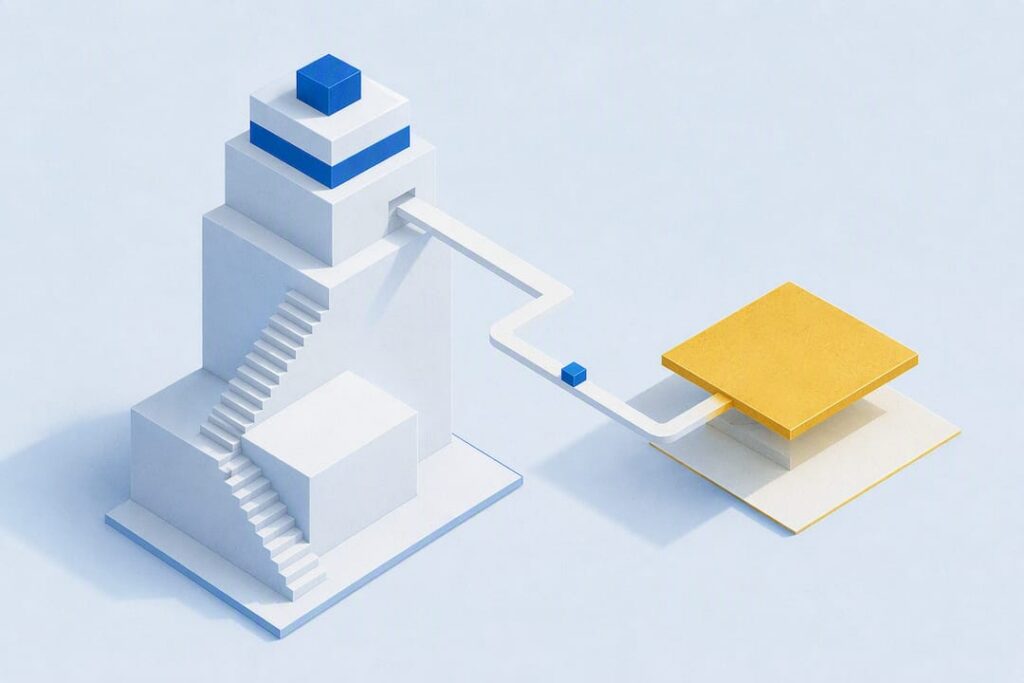
Context switching fatigue is the hidden cognitive tax of jumping between tasks all day — it drains deep-focus capacity and forces your brain through a lengthy resumption lag every time you return to real work. It’s measurable, it’s distinct from general burnout, and it responds well to specific, evidence-backed tactics rather than vague self-care advice.
TL;DR:
- Most interruptions occur every three minutes on average, and it takes about 23 minutes to regain full focus after each one.
- Complex or unpredictable tasks increase switching costs more than routine ones, especially without clear cues for transitions.
- Individuals with ADHD traits or high-stress roles experience significantly higher subjective fatigue during task switches.
- Simple habits like batching similar tasks, turning off non-essential notifications, and writing quick notes before switching reduce mental rebuild time.
- Team-level policies such as eliminating unnecessary meetings, protecting focus windows, and setting response expectations help decrease overall switching fatigue.
Table of Contents
- What Is Context Switching Fatigue, and How Is It Different From Burnout?
- What Does the Research Say About Switch Costs and Resumption Lag?
- What Causes Context Switching Fatigue at Work?
- Who Struggles Most With Task-Switching Burnout?
- How Can You Reduce Context Switching Fatigue on Your Own?
- How Can Teams Reduce Task Switching Burnout Together?
- How Do You Measure Whether Focus Is Actually Improving?
- An Executive Coach’s Take on Building Team-Wide Focus
- How a coaching service can help you build focus that actually sticks
- Sources
- FAQ
What Is Context Switching Fatigue, and How Is It Different From Burnout?
Context switching fatigue is the mental depletion that builds from repeatedly shifting attention between unrelated tasks, tools, or conversations. Each shift forces your brain to drop one mental model and rebuild another, and that rebuilding carries a real cognitive cost.
Burnout is different. Burnout develops over months or years from chronic overload, unclear purpose, or lack of control, and it usually needs systemic change (workload, role, boundaries). Context switching fatigue can show up in a single afternoon, and it often responds to tactical fixes.
- Time course: burnout is slow and cumulative; switching fatigue can spike within hours.
- Cause: burnout stems from sustained pressure; switching fatigue comes from fragmented attention.
- Fix: burnout usually needs structural change; switching fatigue often improves with scheduling and notification changes.
A manager who feels fine on Monday but mentally shredded by Wednesday afternoon, after six meetings and forty Slack pings, is likely dealing with switching fatigue. Someone who dreads Mondays every week, regardless of workload, is more likely dealing with burnout.
What Does the Research Say About Switch Costs and Resumption Lag?
The numbers here are startling once you see them written down. Information workers get interrupted roughly every three minutes on average, and it takes about 23 minutes to return to the same depth of engagement they had before the interruption, according to Gloria Mark’s research at UC Irvine.
The 23-Minute Tax: Every meaningful interruption can cost you nearly half an hour of deep engagement, not because the task itself takes that long, but because your brain has to rebuild the mental model it just abandoned.
That rebuilding process has a name in cognitive psychology: goal-shifting and rule-activation. Rubinstein, Meyer, and Evans’s 2001 task-switching experiments found that switching costs are measurable in milliseconds in the lab, and grow as the rules governing each task become more complex. Task cuing (a clear signal of what’s coming next) reduces that cost, which is part of why unstructured, reactive workdays feel so much worse than planned ones.
- Lab switch costs are real but small per instance; the damage comes from frequency.
- Complex or unfamiliar tasks amplify the cost more than routine ones.
- Clear cuing and mental preparation measurably shrink the lag.
The gap between millisecond lab costs and a 23-minute real-world lag comes down to reconstruction. In a lab, you’re switching between simple digit tasks. At your desk, you’re rebuilding an entire mental map, project context, open threads, half-finished sentences, before you can do useful work again.
What Causes Context Switching Fatigue at Work?
Most of it comes from patterns so normal you’ve stopped noticing them.
- Impromptu meetings and drop-bys. A “quick question” from a colleague or manager doesn’t feel disruptive in the moment, but it triggers the full rebuild cycle.
- Tool switching. Bouncing between email, a chat app, a project tracker, and a dozen browser tabs multiplies the number of mental models you’re holding at once.
- Task fragmentation. Vague project scopes and competing priorities force you to constantly reassess what you’re even supposed to be doing.
- Self-interruption. Checking your phone or inbox “just in case” is often worse than an external interruption, because you’re doing it to yourself, repeatedly.
Picture a typical Tuesday: you open a document at 9:00, get pulled into a Slack thread at 9:04, return to the document at 9:15 (after replying to two more messages), then get invited to an “urgent” 15 minute call that runs 40 minutes. By 11:00, you’ve touched five different tasks and finished none. That’s not a bad day. For a lot of knowledge workers, that’s just Tuesday.
Who Struggles Most With Task-Switching Burnout?
Not everyone experiences switching fatigue the same way, even when their output looks identical on paper.
- People with ADHD-like traits report significantly higher subjective strain and frustration during task switching, even when their behavioral switch costs are similar to peers without those traits, according to a 2026 study on executive control.
- Managers and other coordination-heavy roles face a structurally higher rate of external interruptions, simply because being interruptible is part of the job description.
- Emotional signs (short temper, mounting frustration) can appear well before your actual output drops, which means you can’t rely on performance metrics alone to catch this early.
- If subjective exhaustion feels disproportionate to your actual workload and persists for weeks, that’s worth a conversation with a clinician rather than another productivity hack.
A 2026 operational-capacity framework in Frontiers in Psychiatry helps explain this: engagement doesn’t degrade smoothly. It can collapse abruptly once a buffering capacity is exceeded, and that threshold sits lower for some people than others.
How Can You Reduce Context Switching Fatigue on Your Own?
Fixing this doesn’t necessarily require quitting your job or completely overhauling your calendar. It often involves adopting a handful of specific, repeatable habits.
Task batching and time-blocking comes first. Group similar work (all your emails, all your creative writing, all your calls) into dedicated blocks rather than letting them interleave randomly. A simple weekly pattern: mornings for heads-down work, early afternoon for meetings, late afternoon for admin and quick replies.
Notification governance matters more than most people admit. Turn off all but VIP alerts on your phone, check email at set intervals (say, three times a day) instead of continuously, and set your chat status to “focus mode” during blocked time so people know not to expect an instant reply.
Single-purpose sessions and re-entry rituals shorten the resumption lag when switching truly can’t be avoided. Before you close a task, jot down one sentence about exactly where you left off. It sounds trivial, but it cuts the rebuild time dramatically when you come back.

Async work patterns (written updates instead of standing meetings, shared docs instead of a string of clarifying messages) reduce the number of times you get pulled out of focus reactively.
Micro-recovery techniques, a five-minute walk, a few minutes of quiet, work best right after a heavy switch, not just at the end of the day.
- Batch similar tasks into blocks.
- Set specific notification windows, not “always on.”
- Write a one-line re-entry note before switching away.
- Default to async updates over ad hoc meetings.
- Use micro-recovery breaks right after cognitively heavy switches.
Pro Tip: Protected focus time collapses fast without a witness. Tell one colleague or your manager exactly when your focus block runs, and ask them to hold you to it. Boundaries that only exist in your own head get overridden by the first “quick” ping that comes along.
How Can Teams Reduce Task Switching Burnout Together?
Individual tactics only go so far when the team culture around you rewards constant availability. Fixing this at scale takes a few concrete policy shifts.
- Audit recurring meetings quarterly and kill or shorten anything without a clear purpose and a tight attendee list.
- Protect focus windows on team calendars, blocks where no one schedules meetings, enforced by the calendar tool itself, not just a verbal agreement.
- Assign a single owner to each task or decision, with explicit handoff rules, so work doesn’t bounce between three people asking each other for status updates.
- Set response-time expectations (an SLA) for chat versus email, so people stop feeling obligated to reply within minutes to everything.
- Consolidate tools where you can. Fewer channels and standardized notification defaults mean fewer places attention has to fragment.
Pilot one change at a time. Microsoft’s WorkLab research on the “infinite workday” repeatedly finds that small, low-cost changes like these outperform sweeping mandates that nobody actually follows.
How Do You Measure Whether Focus Is Actually Improving?
You don’t need elaborate software to track this. A simple diary works.
- Protected focus minutes per day, logged against your calendar.
- Interruption count, a tally each time you’re pulled off task, external or self-inflicted.
- A short subjective load rating (1 to 10) at the end of each day.
- Estimated resumption lag, a rough guess at how long it took to get back into flow after each switch.
Run this as a two-week pilot: one week documenting your current pattern, one week after applying batching and notification changes. Most people see a rise in protected focus minutes and a drop in self-reported strain well before output metrics move, and that early signal is what tells you the change is working.
An Executive Coach’s Take on Building Team-Wide Focus
Leaders who normalize constant interruption train their teams to do the same, often without realizing it. Real change starts with visible modeling: guarded calendars, explicit response norms, and delegation scripts that don’t require you to be reachable every hour. Fatigue you can’t see on a dashboard is still fatigue.
— Junna Liao
How a coaching service can help you build focus that actually sticks
Tactics like time-blocking and notification rules work, until the pressure of a real week overrides them and old habits creep back in. One key gap coaching addresses is sustained accountability for boundary-setting and behavior change that tactical fixes alone rarely maintain.
1:1 career coaching with Junna works through the identity and habit patterns that keep pulling you back into reactive mode, whether that’s an inability to say no in meetings or a compulsion to answer every message immediately. For professionals whose fatigue runs deeper than scheduling, life coaching with Junna addresses the broader burnout and identity questions that often sit underneath chronic switching stress. If you’re not sure where your energy is actually leaking, The Energy Leadership™ Index Assessment can surface the patterns before you commit to a coaching engagement.
If constant task switching has started to feel like your baseline instead of an occasional bad week, book a discovery call and find out what a focused week could actually look like.
Sources
- The cost of interrupted work: more speed and less accuracy? — Gloria Mark (UC Irvine)
- Executive control of cognitive processes in task switching — Rubinstein, Meyer & Evans (2001)
- Operational Economy and Global Switching Framework — Frontiers in Psychiatry (2026)
FAQ
What Is Cognitive Exhaustion?
Cognitive exhaustion is the depleted mental state that follows sustained effort on demanding tasks, especially when attention gets pulled in multiple directions. It shows up as slower thinking, more errors, and a shorter fuse, often well before you consciously notice you’re tired.
Do People With ADHD Struggle With Task Switching?
People with ADHD-like traits often report significantly higher subjective frustration during task switching, even when their behavioral switch costs are similar to peers, according to a 2026 study on executive control. The strain is real even when performance metrics don’t show it.
What Are Examples of Context Switching?
Common examples include stopping a report to answer a Slack message, jumping from a client call straight into email, or bouncing between five open browser tabs while trying to write. Any shift that forces your brain to drop one mental model and load another counts.
How Long Does Context Switching Take?
Full recovery to the same depth of engagement takes about 23 minutes on average, according to Gloria Mark’s interruption research. The switch itself happens in seconds. The costly part is rebuilding the mental context you had before the interruption.
Recommended
- Mindful Leadership Coaching: Mastering the Alchemy of Presence and Energy
- Executive Coaching for High Performers: Mastering the Alchemy of Leadership
This blog is for educational and inspirational purposes only. It is not medical, legal, financial, or mental health advice. Your journey is unique; please seek qualified professional support for decisions that affect your health, finances, or wellbeing.